Explore material regeneration
Explore biochar conversion
Explore acoustic biomaterial
Explore gelatin systems
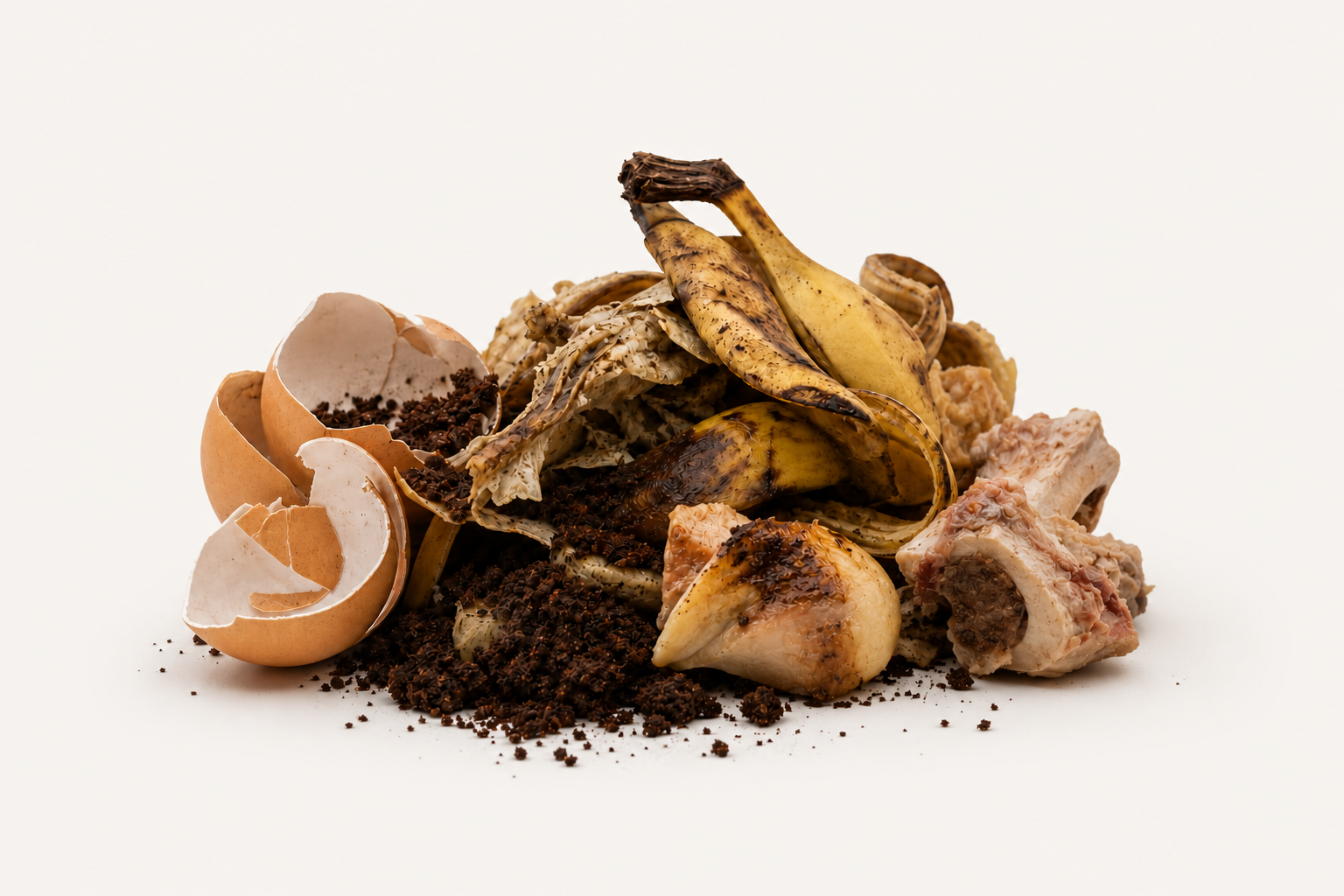
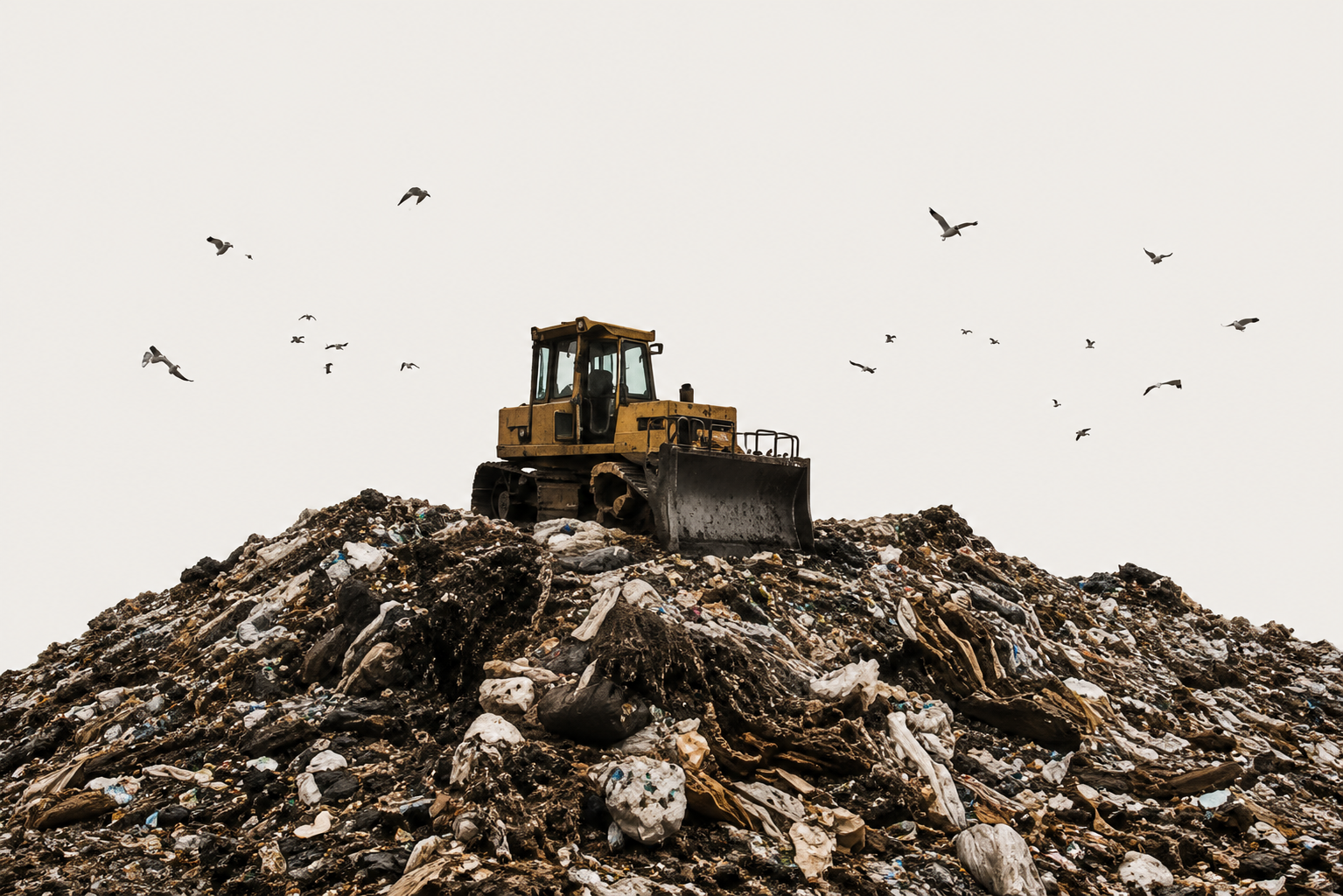
Organic residues become a climate problem when they are mixed, misclassified, and sent to landfill.
No separation.
No distinction.
Organic matter decomposes
without oxygen.
Climate impact and
material loss.
The climate issue begins when different residues are treated as one disposable category.
This project looks at food waste through four connected lenses: where residues go, what emissions they create, how they are classified, and what material futures are lost.
Food waste makes up nearly a quarter of municipal solid waste in U.S. landfills.
Landfilled food waste is estimated to cause over half of landfill methane emissions.
A large share of the U.S. food supply is never eaten, hiding material value inside “waste.”
Surplus food carries major economic value, pointing to opportunities beyond disposal.
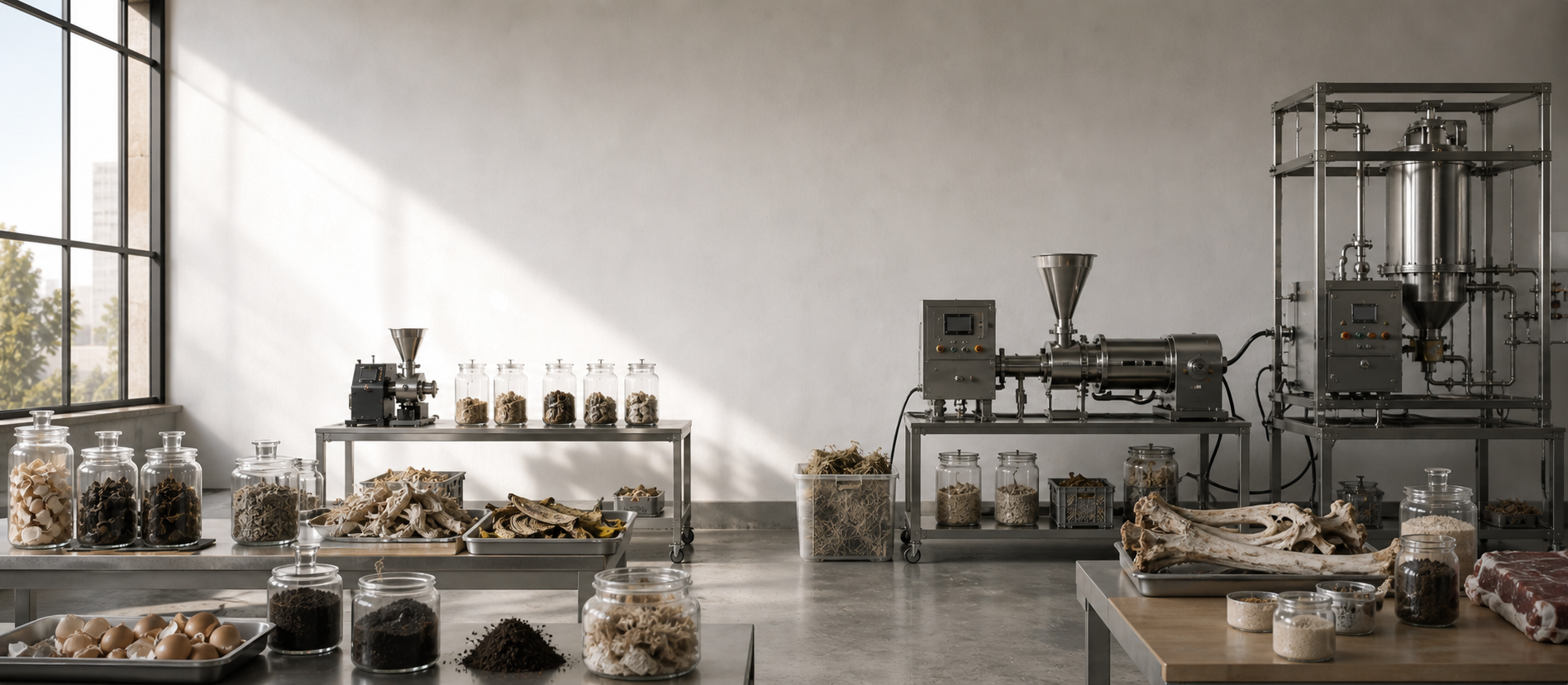
By separating residues by material behavior, each stream becomes a different design opportunity.
All four projects begin where residue is produced. The chain highlights where we intervene on-site and where residue becomes material output.
Machine Process + UX
Machine Process + Application
Biochar
Gelatin
Bakery Consumables
Acoustic Panel
The goal is to keep residue in circulation longer, before it becomes landfill matter.
System Discovery documents a climate-oriented design investigation developed between March and May 2026, exploring food residue streams, material behavior, and the design of extended lifecycles.
Across four projects, the collection examines how designers can create impact by reframing organic residues from disposal categories into processing systems, material outputs, and new use cycles.
Hannah guided the studio with rigorous logic, systems thinking, and strong storytelling, helping us understand how each project could affect the larger industrial chain it enters.
With a background in architecture and long-standing research in bio-related material futures, Peter has shaped generations of RISD students toward experimental, innovative, and materially ambitious work.