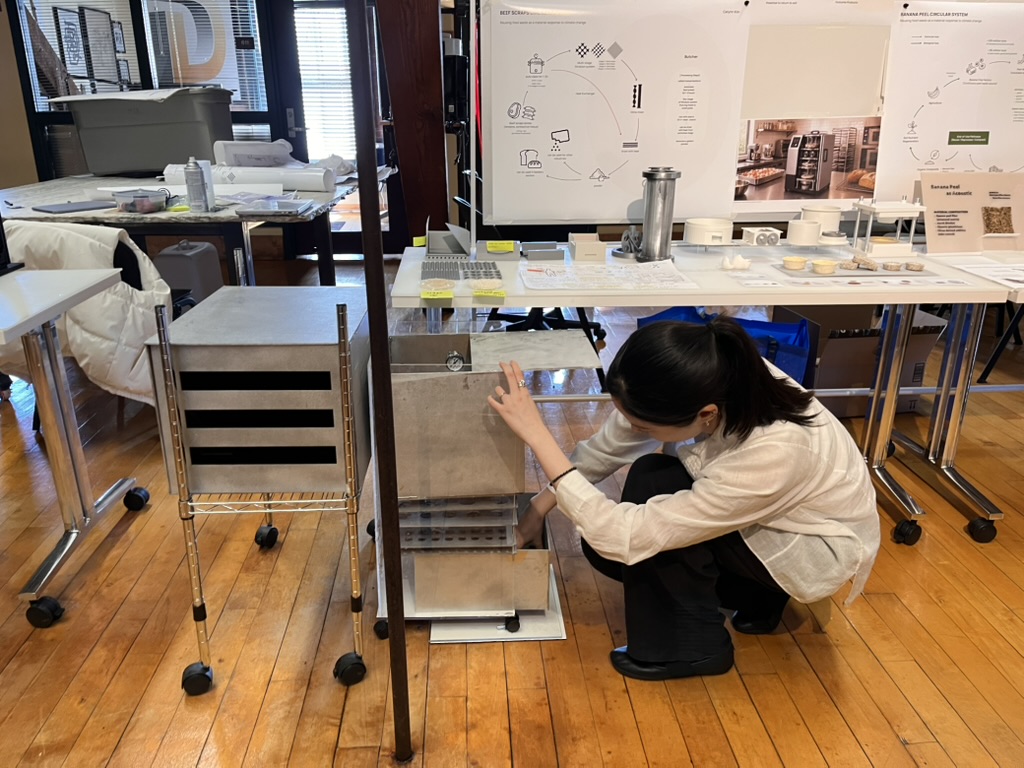
BEEF SCRAPS | Gelatin Systems
Every day, butcher counters discard bones, tendons, and connective tissue — all of it headed straight to landfill. This system intercepts that waste on-site, extracting gelatin through an autoclave process and converting it into powder or compressed discs. No transportation. No delay. Waste becomes resource right where it's created.
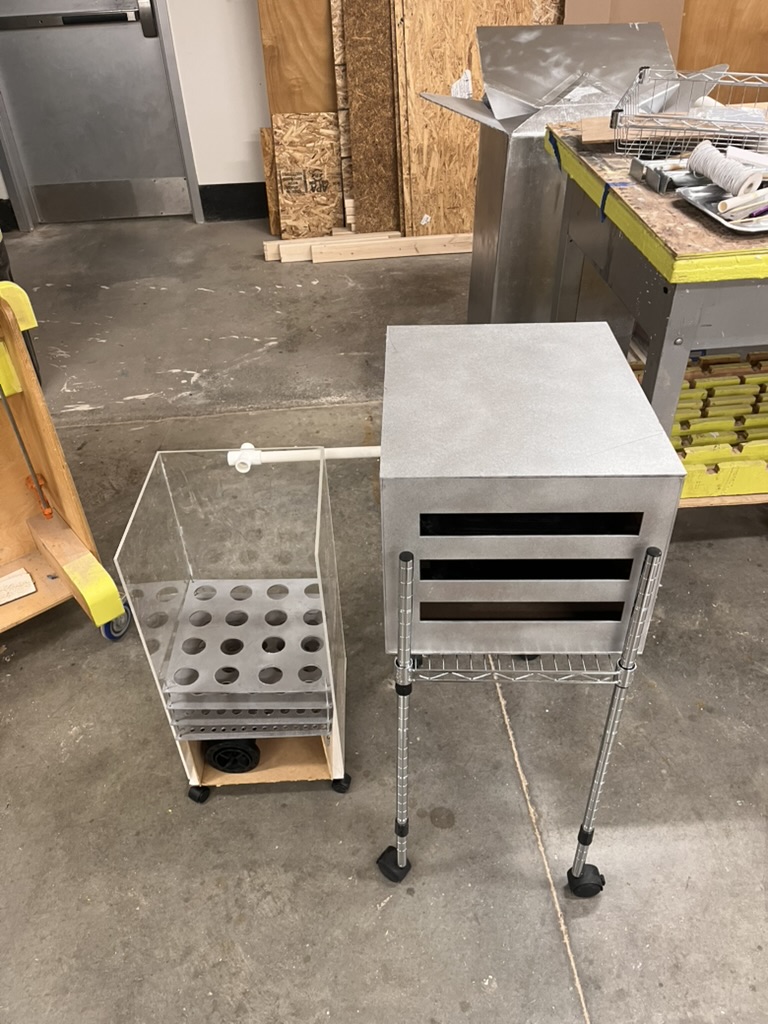
1st Mockup
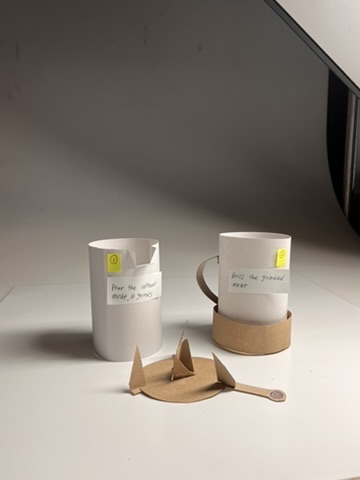
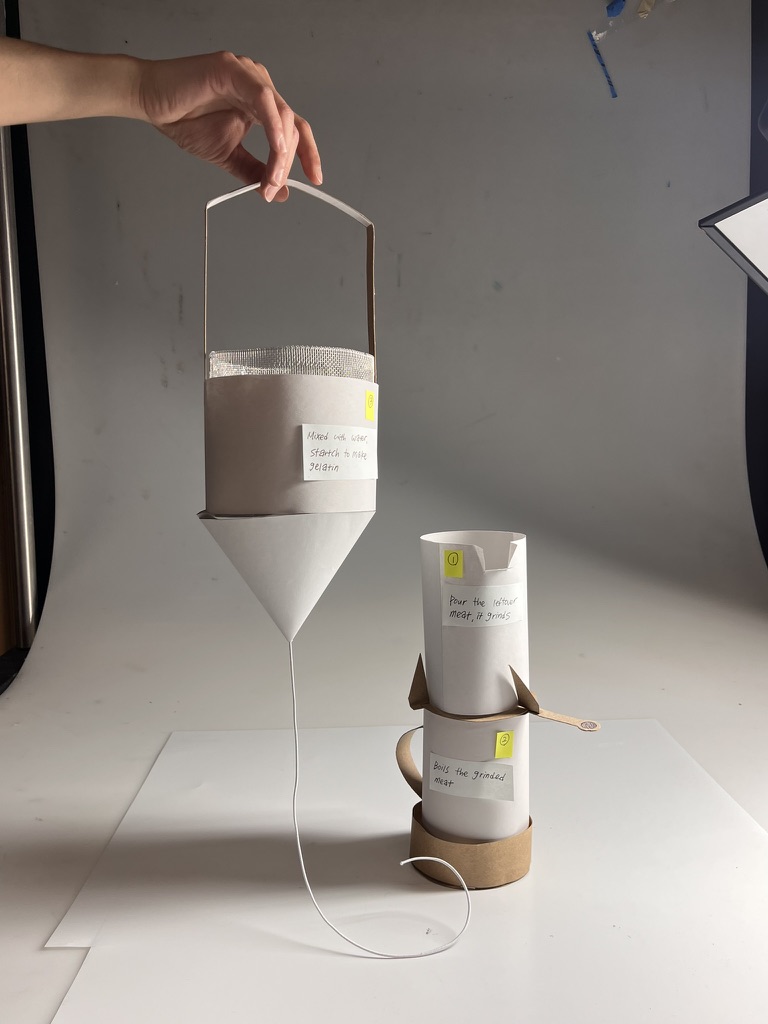
Researched how the product operates as a system. This phase focused on exploring how internal components connect and function together, and what possibilities exist for the overall process flow.
Through this research, four distinct processing stages were identified as necessary: heating the leftover meat scraps, separating fat and gelatin through a filtration system, mixing the extracted gelatin liquid with starch, and forming a thin gelatin film as the final output.
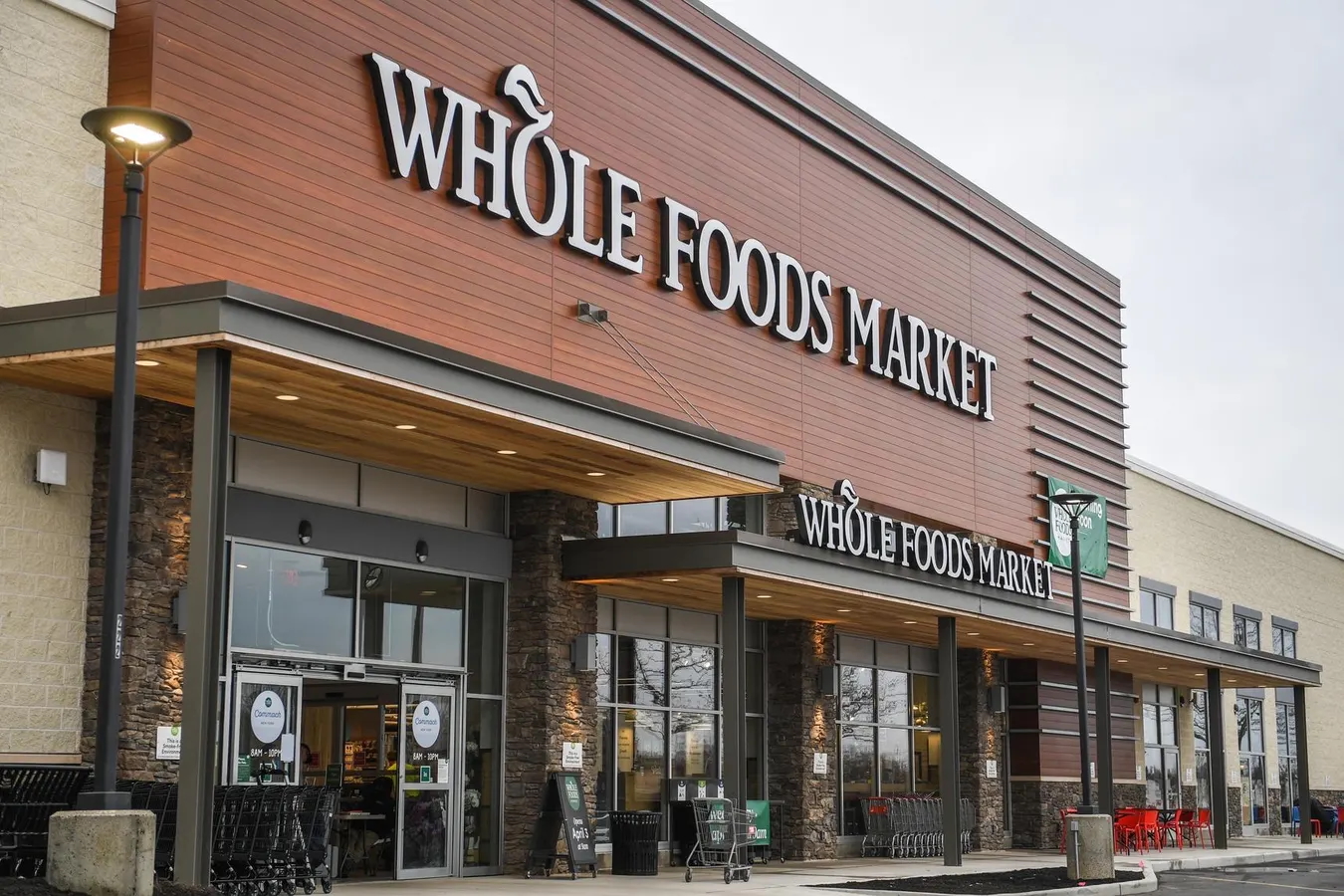
Following the first mockup, it became clear that keeping the entire process in-house - within the market itself - would significantly amplify the carbon reduction impact. Since the core goal of this project is greenhouse gas reduction, transporting the output to an external facility would contradict that mission. One Whole Foods store generates approximately 150 kg of meat scraps daily. Sending that to landfill produces roughly 375–450 kg of CO₂ per day. In-house processing eliminates that entirely.
2nd Mockup
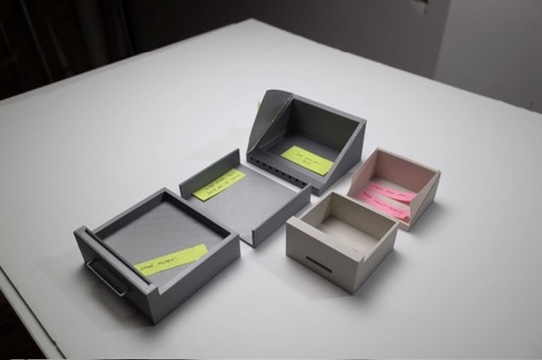
After mapping the detailed process, the focus shifted to optimizing the machine from a designer's perspective - specifically, how the system could be structured around actual user behavior.
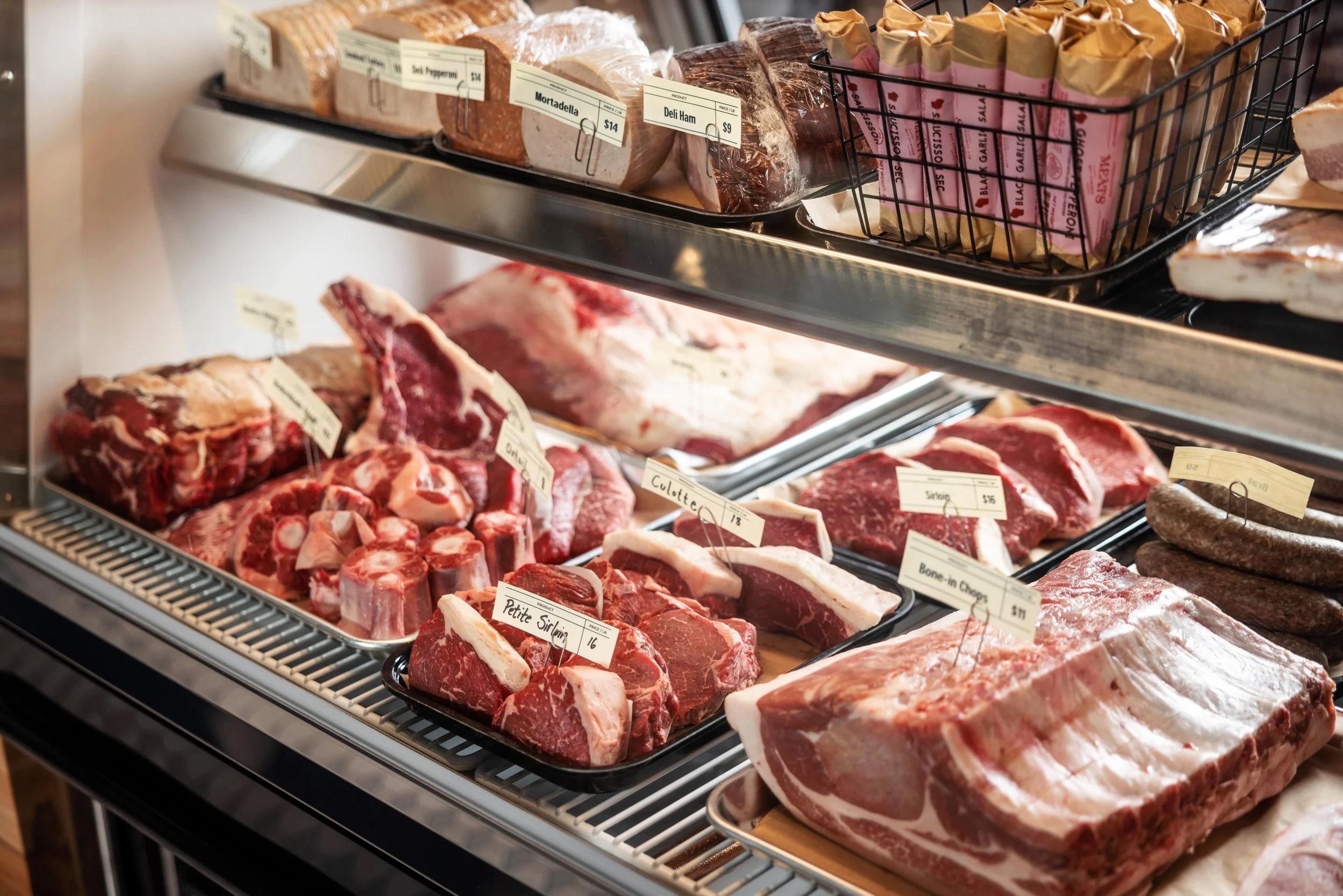
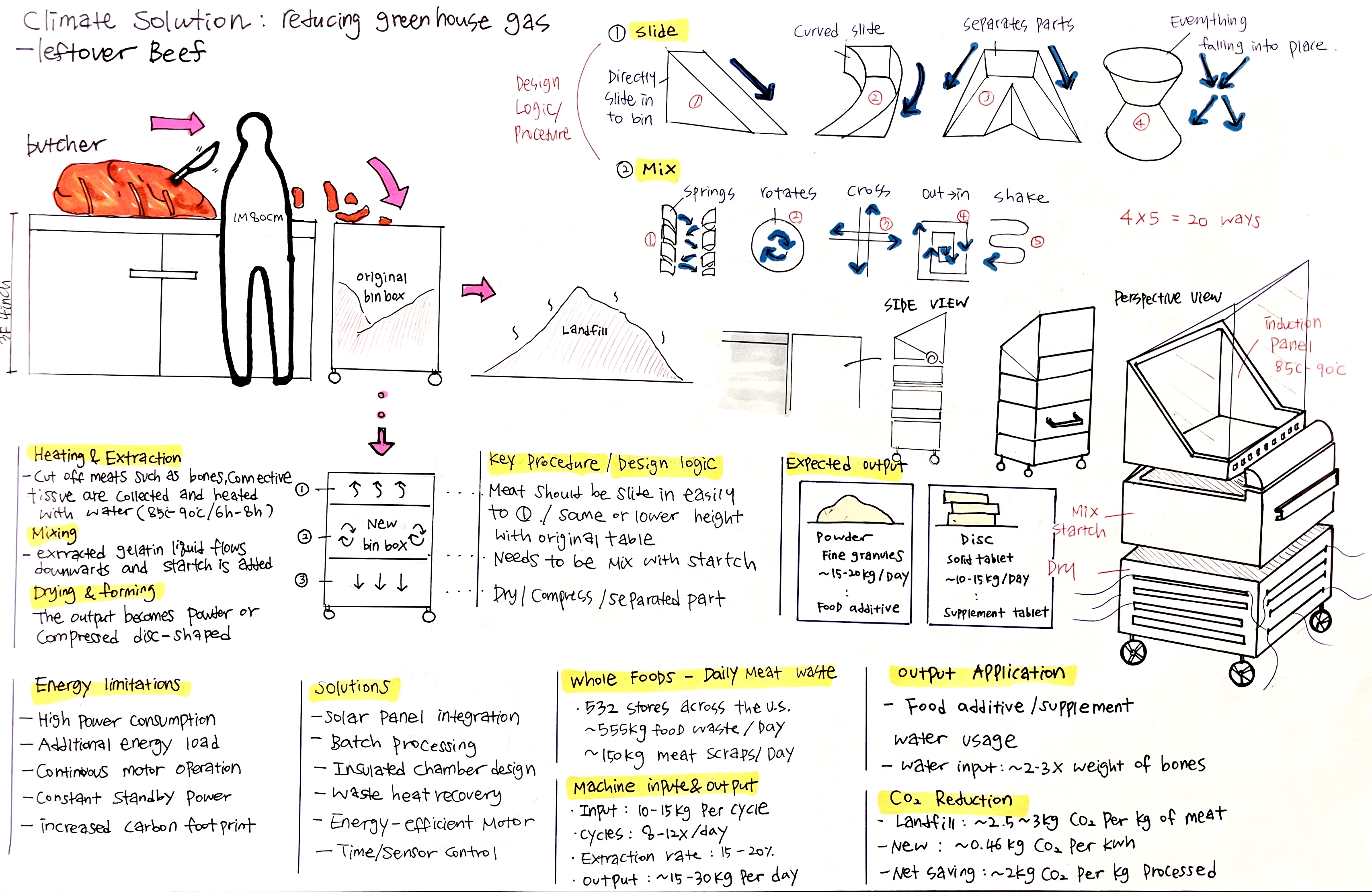
Through approximately four on-site interviews conducted at Whole Foods Market, it was observed that butchers discard meat scraps directly into a bin located beneath the cutting table immediately after processing. Based on this insight, the machine was designed to connect directly to the butcher table - allowing scraps to slide in immediately without any additional steps or behavioral change required from the user.
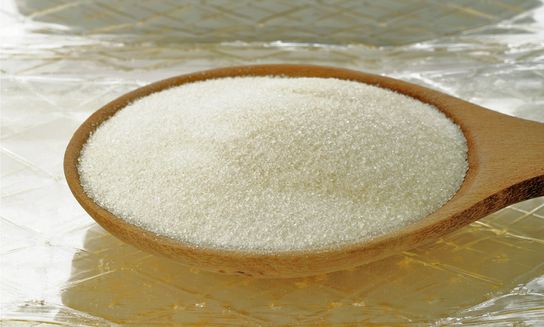
Each scrap then moves through the four-stage process to become gelatin output. A critical part of this phase was quantifying the impact: one store generates approximately 150 kg of meat scraps per day, which can be converted into roughly 15~30 kg of gelatin powder per day at an extraction rate of 15~20%. This translates to a CO₂ reduction of up to 88% compared to conventional landfill disposal, saving approximately 2 kg of CO₂ per kg of meat processed.
Final Mockup
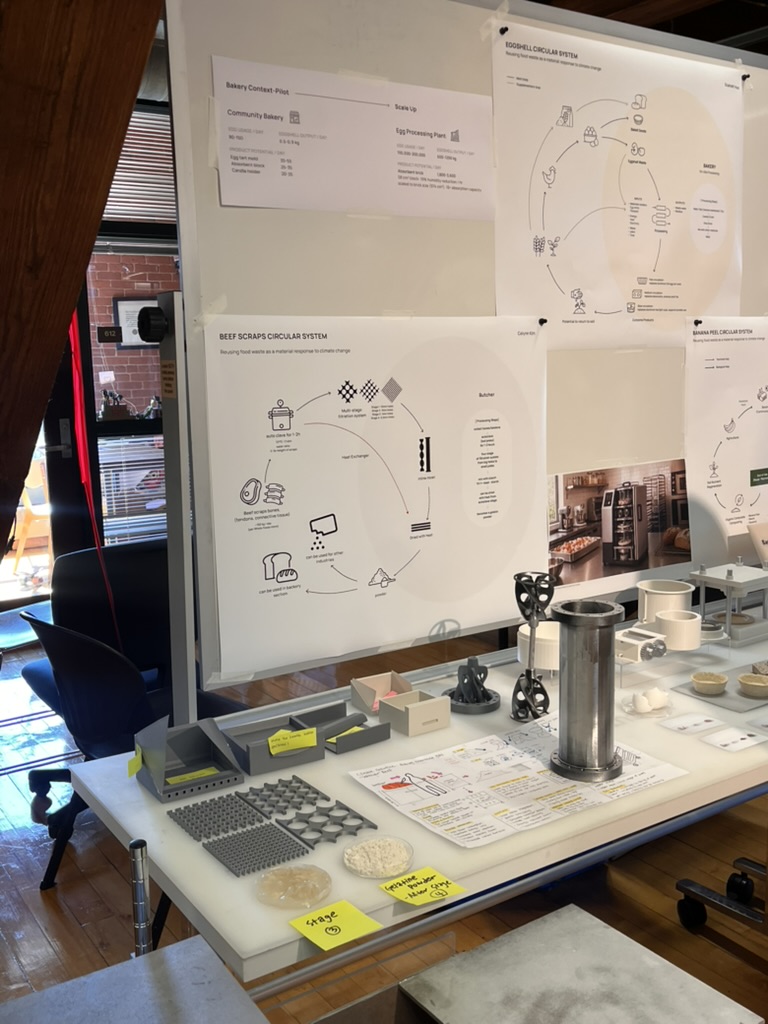
The final model was fabricated at 30% of the actual scale. All structural components reflect real industrial processes used in gelatin extraction.
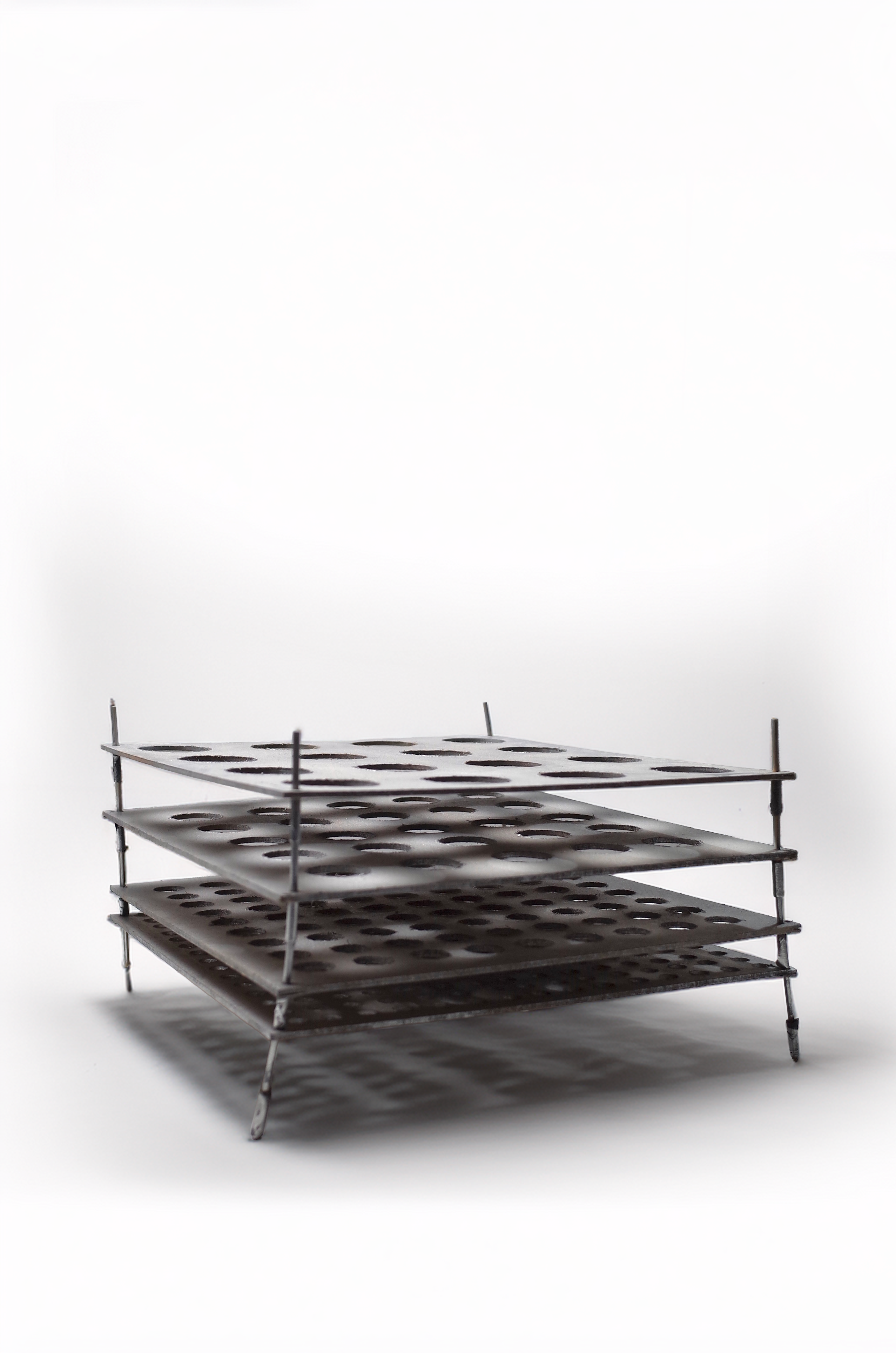
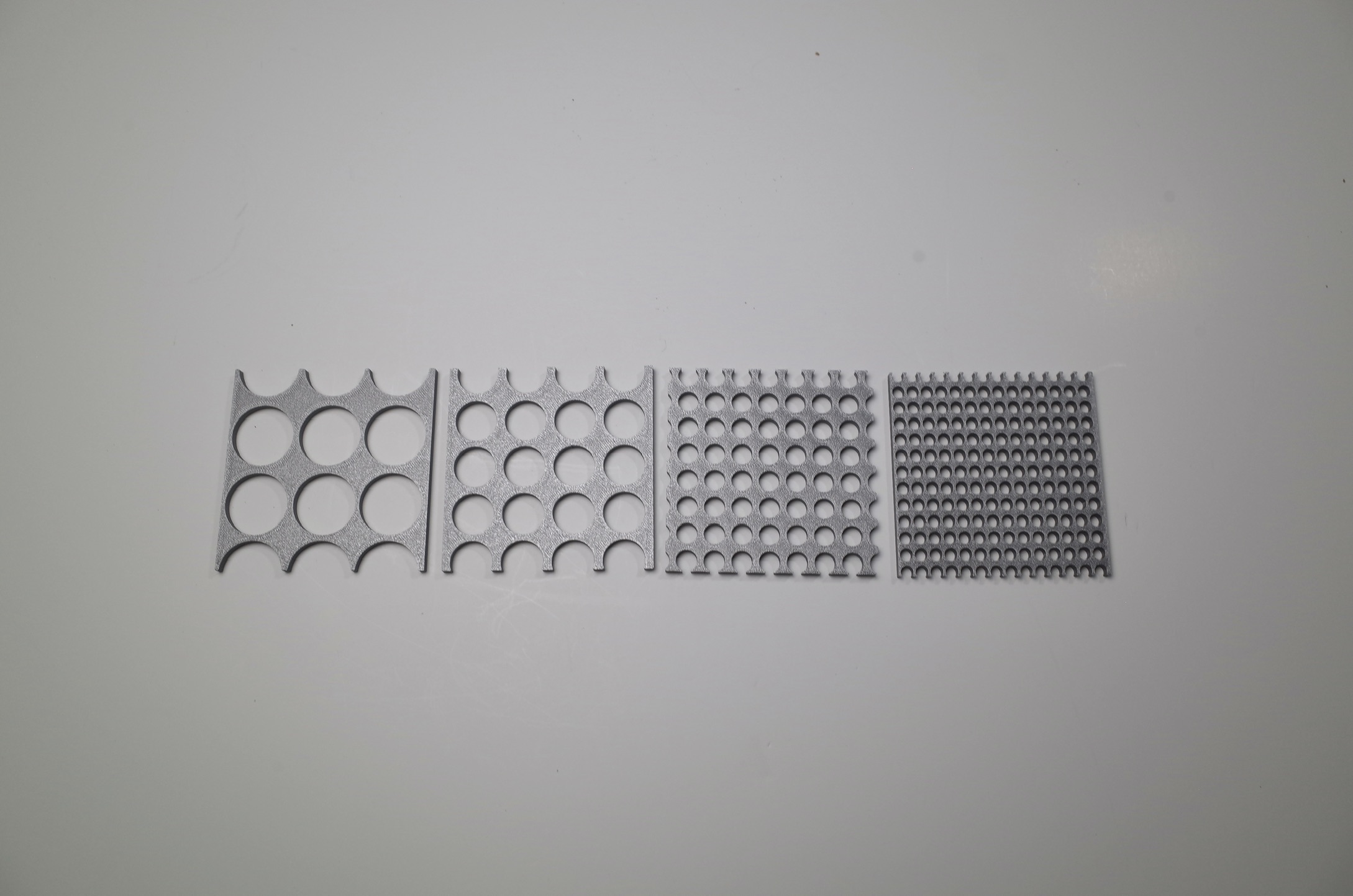
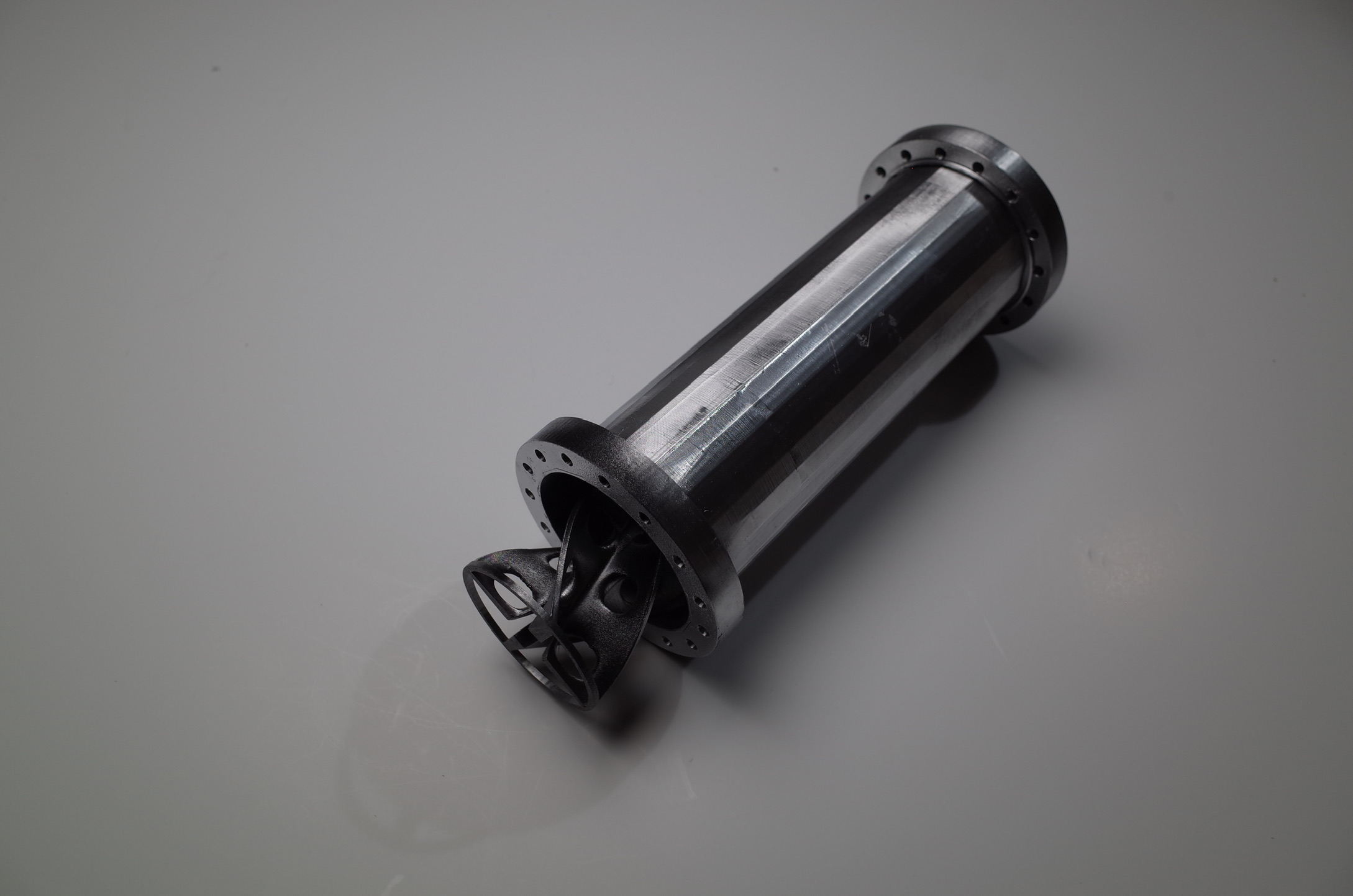
An inline static mixer was incorporated to eliminate unnecessary energy consumption during the mixing stage - requiring no motor, as the flow of liquid itself creates the mixing action. The four-stage filtration system was also fully realized: perforated plates with progressively smaller hole sizes - 10mm, 3mm, 1mm, and 0.5mm — ensure that only the liquid necessary for gelatin formation passes through, while solid bone and tissue fragments are captured at each stage.
For the drying stage, waste heat generated by the autoclave chamber at 121°C is redirected through a metal pipe. As steam travels through the pipe, moisture condenses on the walls, leaving only dry, warm air - approximately 60~70°C - to circulate through the drying chamber. This closed-loop heat recovery system requires near-zero additional energy for drying, bringing the total energy footprint of the system to approximately 3.5–5.5 kWh per day.
research for
reducing green house gas emissions